


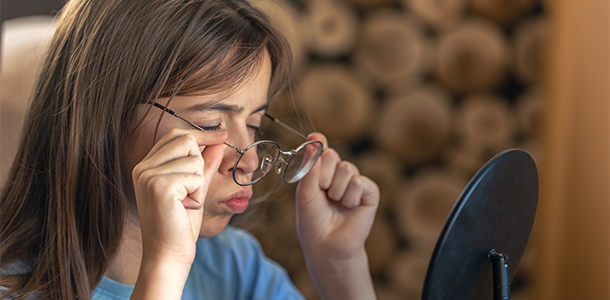
Good vision is foundational to a child’s development. Children use their eyes to absorb almost everything they learn in their first years of life — movement, language, spatial awareness, and social cues all depend heavily on clear, accurate visual information. Yet many common childhood vision problems go undetected for years, partly because children have no baseline to compare their own sight to, and partly because standard school screenings catch only a fraction of real eye health issues.
Why School Vision Screenings Are Not Enough
A school screening that asks a child to read letters off a chart tests distance acuity, and nothing else. It misses nearsightedness that is mild enough to still pass the chart, most cases of farsightedness (which can interfere significantly with reading even when distance vision is fine), amblyopia (lazy eye), binocular vision problems, and early signs of eye disease. A comprehensive exam performed by an optometrist or ophthalmologist covers all of these.
The American Optometric Association recommends comprehensive eye exams at six months, age three, and before entering kindergarten. After that, children with no identified problems should be seen every one to two years; children with glasses, contact lenses, or a diagnosed condition need annual exams.
Common Childhood Eye Conditions
Amblyopia — commonly known as lazy eye — is the most common cause of vision impairment in children, affecting roughly two to three percent of kids. It develops when one eye sends a blurry or distorted image to the brain, and the brain learns to rely on the other eye. Over time, the weaker eye’s visual pathway becomes underdeveloped. Treatment is most effective before age seven or eight, when the visual system is still developing, and typically involves patching the stronger eye or using atropine drops to force the weaker eye to work harder.
Strabismus — a misalignment of the eyes (crossed eyes or a wandering eye) — affects approximately four percent of children. It can cause amblyopia if untreated and may also lead to social and emotional difficulties. Treatment ranges from glasses and patching to surgery, depending on the type and degree of misalignment.
Myopia (nearsightedness) is the fastest-growing eye condition among children globally. Rates have risen steeply over the past several decades, likely due to reduced time outdoors and increased near work. Myopia that progresses rapidly during childhood carries a higher lifetime risk of serious conditions like retinal detachment and myopic macular degeneration. Myopia management programs — including orthokeratology lenses, atropine eye drops, and specialized soft contact lenses — can significantly slow progression.
Signs That Your Child May Have a Vision Problem
Children rarely volunteer that their vision is unclear — they simply adapt as best they can. Watch for signs like sitting unusually close to the television, holding books very close to the face, frequent eye rubbing, squinting, tilting the head when looking at something, complaining of headaches or tired eyes, avoiding reading or near activities, or a noticeable change in school performance. Infants who are not tracking moving objects by three months or who do not make eye contact should be seen by an eye doctor promptly.
Protecting Children’s Eyes
Spending time outdoors — at least one to two hours per day — is one of the few evidence-based strategies for reducing the risk of developing myopia or slowing its progression. Natural light and the visual experience of looking at objects at varying distances appear to support healthy eye development.
Protective eyewear is important during sports and activities with a risk of eye injury. Polycarbonate lenses offer excellent impact resistance and are standard in sports goggles. Children who swim regularly should wear goggles to protect against chlorine irritation and waterborne eye infections.
Our pediatric eye care team provides comprehensive evaluations for patients of all ages. Visit our eye care services page to learn more or use our directory to find a pediatric eye care provider near you.