


What Is a Comprehensive Eye Exam?
A comprehensive eye exam evaluates your entire visual system — not just whether you need glasses. Our doctors assess the health of your eyes inside and out, checking for conditions that may have no early symptoms.
What Happens During the Exam
Visual Acuity Test You’ll read letters on a chart at various distances to measure how well you see at near and far ranges.
Refraction Assessment Using a phoropter, we determine your exact prescription by asking you to compare lens options until we find the clearest vision.
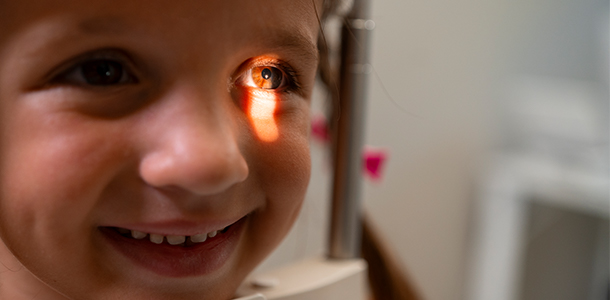
Slit-Lamp Examination A biomicroscope lets us examine the structures at the front of the eye — cornea, iris, and lens — in fine detail.
Dilated Eye Exam Drops widen your pupils so we can examine the retina and optic nerve. This is the most important step for detecting glaucoma, macular degeneration, and diabetic retinopathy.
Tonometry A gentle puff of air or a small probe measures the pressure inside your eye — elevated pressure is a key risk factor for glaucoma.
How Often Should You Go?
| Age Group | Recommended Frequency |
|---|---|
| Children (under 6) | At 6 months, 3 years, before school |
| School-age | Every 1–2 years |
| Adults 18–64 | Every 2 years (annually if risk factors) |
| Seniors 65+ | Annually |
Don’t Wait for Symptoms
Many serious eye diseases — including glaucoma, diabetic retinopathy, and macular degeneration — cause no pain or noticeable vision change until significant damage has occurred. Regular exams are the only way to catch these early.
Schedule your comprehensive eye exam today.