


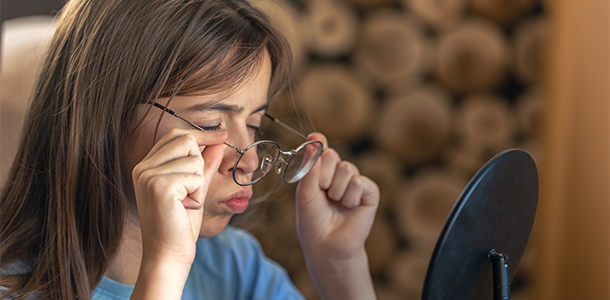
Walk into any optical shop or browse any eyewear retailer online and you will find blue light glasses prominently displayed, often with bold claims about reducing eye strain, improving sleep, and protecting your eyes from screen damage. The market for these lenses has exploded over the past several years, driven by concerns about how much time people spend staring at digital devices. But what does the science actually say? Are blue light glasses worth buying, or are they an expensive solution to a problem that does not exist quite as described?
What Is Blue Light?
Blue light is part of the visible light spectrum, with wavelengths roughly between 380 and 500 nanometers. It is emitted by the sun in large amounts — far more than any digital screen — as well as by LED lighting, fluorescent lights, and the displays on smartphones, tablets, computers, and televisions. Because it has relatively short wavelengths and high energy, blue light scatters more easily in the eye than longer wavelengths, which is why it is sometimes associated with visual discomfort.
The Case for Blue Light Glasses
The strongest evidence for blue light glasses relates to sleep rather than eye strain. Blue light in the evening suppresses the production of melatonin — the hormone that signals to the body that it is time to sleep. Studies show that using screens in the hour or two before bed can delay sleep onset and reduce sleep quality. Blue light filtering lenses or screen settings that warm the color temperature of your display in the evening may help mitigate this effect, particularly for people who are sensitive to light-related sleep disruption.
Some people report feeling less fatigued and more comfortable during long screen sessions when wearing blue light glasses. While this may be a real benefit for some individuals, it is important to note that subjective comfort does not necessarily mean the lenses are protecting against any measurable physical harm.
What the Research Does Not Support
Several large, well-designed studies — including a 2021 Cochrane review — found no clinically meaningful evidence that blue light filtering glasses reduce eye strain symptoms compared to standard lenses. The American Academy of Ophthalmology does not currently recommend blue light glasses for eye protection, noting that the amount of blue light emitted by screens is far lower than what we are exposed to outdoors, and there is no evidence that this level of exposure damages the retina.
The real culprit behind screen-related eye fatigue is not blue light itself — it is reduced blink rate, sustained focus at a fixed distance, poor screen ergonomics, and sometimes an uncorrected or under-corrected prescription. These factors cause the eye muscles to fatigue and the ocular surface to dry out. Blue light glasses do not address any of these underlying causes.
What Actually Helps
If screen use is causing eye fatigue or headaches, a more evidence-based approach starts with ensuring your prescription is current. Even a small inaccuracy in your glasses or contact lens prescription becomes much more noticeable during prolonged screen use. Next, apply the 20-20-20 rule — every 20 minutes, look at something 20 feet away for 20 seconds. Use lubricating eye drops if dryness is an issue. Adjust your screen’s brightness to match the ambient light in the room, and position the screen slightly below eye level at arm’s length.
If you use screens in the evening and have trouble falling asleep, reducing blue light exposure through your device’s built-in night mode or a pair of amber-tinted blue light glasses in the hour before bed is a reasonable, low-cost experiment.
The Bottom Line
Blue light glasses are unlikely to harm you, and they may improve sleep quality if used in the evening. As a daytime eye strain solution, however, the evidence is thin. If you are buying a pair primarily to reduce computer eye fatigue, addressing your workspace ergonomics, blinking habits, and prescription accuracy will likely do more good. Our free digital eye strain calculator can help you identify what is contributing most to your discomfort, and a comprehensive eye exam will confirm whether your prescription is up to date.